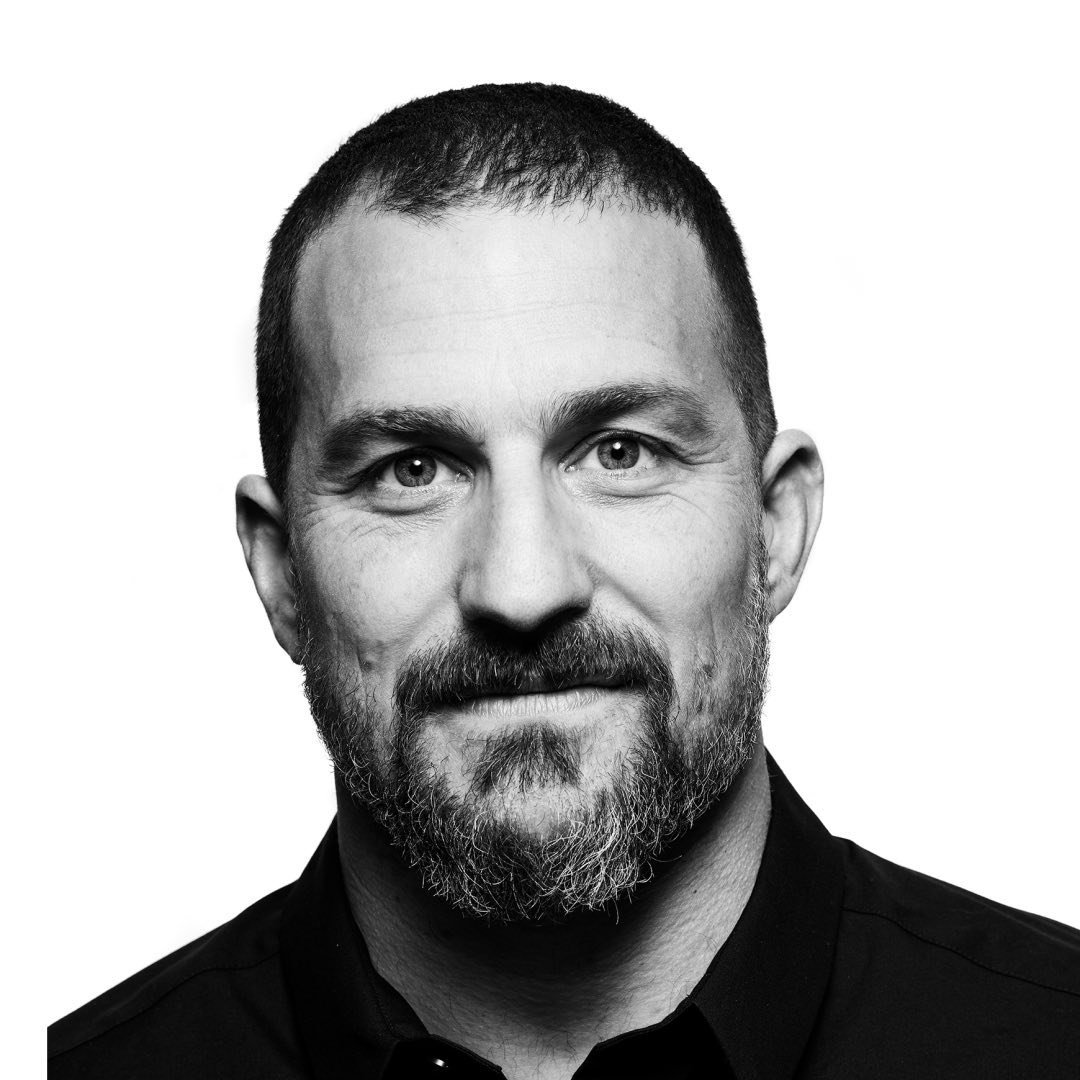
@hubermanlab
Bilim İnsanıAndrew Huberman, Ph.D.
• Professor of Neurobiology & Ophthalmology @stanford.med @stanford • Neuroscience Research & Education • Host of the Huberman Lab podcast
- 8,1 mi
- Seguidores
- 2,9 mil
- Seguindo
- 1,7 mil
- Publicações
O que se destaca
Lido dos 37 posts desta varredura. O Instagram não mostra nada disso.
- TendênciaA metade mais recente destes posts supera a mais antiga: 1.7×.
- Dia da semanaMelhor dia: segunda-feira. Em comparação com os outros dias: 1.4× (10 posts).
- Duração dos reels
- Alcance
Reels que superam as visualizações habituais
4 de 24 chegaram a 2× ou mais das 937,4 mil visualizações habituais
- 2,7% de engajamento
- 3,6% de engajamento
- 5,9% de engajamento
- 2,8% de engajamento
- 1,8% de engajamento
- 1,2% de engajamento
Cada reel é medido pelo valor mediano dos reels desta conta: assim, uma conta pequena e uma grande são lidas do mesmo jeito.
Post a post
Cada post em relação ao habitual do seu tipo, o mais antigo primeiro
Como vai cada tipo de post
Os números habituais de cada tipo, entre os 37 posts lidos
- Visualizações habituais
- 937,4 mil
- Curtidas habituais
- 16,4 mil
- Comentários habituais
- 393
- Engajamento
- 0,22%
- Com 2× ou mais
- 4
- Curtidas habituais
- 21,2 mil
- Comentários habituais
- 1,2 mil
- Engajamento
- 0,26%
- Com 2× ou mais
- 1
A leitura profundaPro · Vitalício
Quando posta, como escreve, quanto duram os reels, com quem trabalha
Quando posta
Dia mais frequente: segunda-feira.
Legendas e hashtags
Caracteres na legenda habitual: 1.201.
Duração e som dos reels
Duração habitual de um reel: 53 s.
Parceiros e marcações
Posts feitos com outra conta: 21.
A leitura profunda abre com Pro e Vitalício
Os dois também leem 120 posts por varredura em vez de 36: cada número aqui se apoia em mais posts.
Cancele o Pro quando quiser. Vitalício: um pagamento único.
Cada número compara posts desta mesma conta entre si. Um grupo é avaliado a partir de três posts, por isso uma varredura pequena diz menos que uma grande.
Contas semelhantes
As contas que o Instagram sugere ao lado de @hubermanlab. Um toque analisa qualquer uma.


Publicações
as 36 mais recentes de 1.702e mais 1 da aba Reels
| Post | Data | Visualizações | vs habitual | Curtidas | Comentários | Ações |
|---|---|---|---|---|---|---|
Comment OVERCOME & I’ll DM you a link to the full episode out now:
Overcome Addictions & Obsessions of All Kinds | with Dr. Anna Lembke
Dr. Anna Lembke, MD, is chief of the Addiction Medicine Dual Diagnosis Clinic at Stanford Medicine and a leading expert in how to overcome addictions of all kinds.
We discuss dopamine dynamics in the brain and how they impact risk-taking, mental obsession, and compulsive behaviors.
We also discuss the most common addiction of all—people’s addiction to control—how codependency is a common form of that and how prayer and spiritual practices can open up new neural pathways and help end unhealthy thought patterns and behaviors, including codependence.
Anna is the author of the Dopamine Nation and a new book “Radical Surrender” which gets into the seemingly paradoxical fact that when people give up trying to control certain thought patterns or behaviors they actually are able to access new strategies to do so. I’ve read the book and it’s amazing. Lots of science and actionable tools.
This new podcast released today we brought in your understanding of dopamine and addictive and compulsive behaviors, codependency and much more.
Comment OVERCOME and I’ll send you a direct message link to the full episode.
You can also find it on all podcast platforms as Huberman Lab.
Please put any questions or comments you might have below.
Thank you for your interest in science!
@stanford.med @stanford
#neuroscience #science #ciência #neurociencia #codependencyReel1.7×9 de nov. de 20261,6 mi19,5 mil3,4 mil | 9 de nov. de 2026 | 1,6 mi | 1.7× | 19,5 mil | 3,4 mil | |
LEVERAGING PARALLEL PATHWAYS, EXERCISE & COLD TO FOCUS & LEARN BETTER •
Moderate to intense exercise increases your levels of alertness and thereby your ability to focus. That focus increases your opportunity to learn new information and skills.
**But exercise itself does not make you smarter per se** You still have to engage in the active process of learning and self directed neuroplasticity.
I cover the details of that and the underlying science in chapter 6 of my book Protocols: An Operating Manual for the Human Body
-
Deliberate cold exposure increases peripheral adrenaline and dopamine and central (meaning within the brain) norepinephrine — and emerging evidence suggests it also increases dopamine within the mesolimbic brain reward pathways.
Together these three molecules: dopamine, norepinephrine, and adrenaline, are referred to as the catecholamines.
Understanding how they work in parallel in the body and brain, and how to stimulate their release in the body and brain can be very useful for health, focus, learning, and much more.
It also explains a lot such as why you actually “get” energy from exercise.
All of this and more also covered in Protocols Ch 3: on stress control, and raising your stress threshold.
PS: The response to the book has been wonderful. Thank you ever so much to all who have read or listened to the book and shared some of what you’ve learned with others!
More important than any protocol are the principles and the mechanisms behind them. Stay curious about scientific mechanisms and principles and you’ll be able to best navigate the health landscape now and forward.
And as always, thank you for your interest in science!
#neuroscience #science #ciencia #neurociencia #protocolsbookReel0.6×5 de nov. de 2026605,7 mil14 mil397 | 5 de nov. de 2026 | 605,7 mil | 0.6× | 14 mil | 397 | |
Andrew Huberman on the best advice he ever got: figure out the most real work you can do every day, consistently, and find a way to reset every week.
@hubermanlabReel2.2×4 de nov. de 20262,1 mi58,8 mil378com @a16z | 4 de nov. de 2026 | 2,1 mi | 2.2× | 58,8 mil | 378 | |
Stop overthinking your recovery.
@les7spellman has coached and tracked recovery in hundreds of athletes who have access to the most expensive recovery tools. What keeps showing up isn't glamorous: sleep a lot, eat pretty well, hydrate, do some low-level work, get sunlight early.
The two biggest levers he names to support recovery are early sunlight and consistent bedtimes. The second one is hard. In professional sport you have travel, practice and late starts that put an athlete's schedule all over the place. This is why having a plan B is important. Les and his team circle the late games and the long flights in advance and build the game plan to optimize recovery in unfavorable conditions:
- Eye mask on the plane
- Earbuds in with no music to block out the noise
- Magnesium timed right
- Get to sleep
What surprised Les was how deeply the players bought in. As one of them put it, in college he was doing the light bed every week, and he feels better now than he did then.
If a consistent bedtime can out-recover a six-figure machine, you probably don't have a tools problem.
Full episode with Les Spellman on building speed and agility is on my YouTube channel.Reel0.4×4 de nov. de 2026369,7 mil2,4 mil56com @drandygalpin, @biomolecularathlete, @les7spellman | 4 de nov. de 2026 | 369,7 mil | 0.4× | 2,4 mil | 56 | |
Comment SUBLIME & I’ll DM you a link to the full episode:
Access the Sublime & Live Your Best Life with Robert Greene
I’ve long been a fan of Robert Greene’s books, and indeed have recommended Mastery any time someone asks me for a positively life-changing book suggestion.
Recently, I sat down with him on the Huberman Lab podcast to discuss his latest book: Law of the Sublime. It’s absolutely incredible. And the discussion we had on the podcast is absolutely one of my favorite of all time.
Robert Greene is an expert on human nature, individual expression and personal growth. On the podcast and in his new book he explains the sublime— what it is and how to access it: in relationships, work, through observation, expression and more.
What emerges is a larger conversation about human consciousness, perception and ensuring your life is lived and experienced to the fullest.
Thank you @robertgreeneofficial for the incredible works you’ve put into the world and for being a guest on the podcast once again. It was an honor and a pleasure!
Thanks for Robert, this is a podcast you won’t want to miss!
Comment SUBLIME & I’ll DM you a link to the episode.
And as always, thank you for your interest in science!Reel2.8×2 de nov. de 20262,6 mi92,6 mil2,4 milcom @robertgreeneofficial | 2 de nov. de 2026 | 2,6 mi | 2.8× | 92,6 mil | 2,4 mil | |
WHEN TO *NOT* TRUST YOUR THOUGHTS
During my recent podcast discussion with @rossedgley about motivation and how to access it using many mindsets — not just one, we arrived at the topic of circadian (cyclical) influences on mindset.
The major takeaway of that portion of podcast is this: the longer you have been awake and in particular when you are awake between the hours of 2 AM and 5 AM (this is assuming you are diurnal) your forebrain is not very good at regulating the aspects of your brain controlling emotionality, rationality, and strategic decision-making.
A different way to put this: you are seriously brain impaired during those hours.
Again, if you’re nocturnal because you work the night shift this is not the case for that 2 AM to 5 AM stretch but it is true for most people who follow a sleep-wake schedule of asleep sometime between 9pm and 12midnight and wake up 5-8am.
So rather than despair about the thoughts that you have if you wake up in the middle of the night or worse— rather than making important decisions on the basis of those thoughts, understand that if you wait 4 to 6 hours (and ideally get some more sleep!) you’ll be significantly sharper, physically stronger and significantly more durable in both mind and body…
… and therefore able to make far better decisions.
This might seem like simple advice. Or even common sense. But most people don’t realize that their brain just doesn’t function well at those hours, and therefore trusting your thoughts in those hours is not a good idea. Unless you have to in an emergency, of course.
The brain is a wonderful organ, but just like many aspects of our biology, not all of its features are adaptive. I thought they come to you when you wake in the middle of the night our altered because of circadian mechanisms.
Listen to your thoughts accordingly. Lend weight to them accordingly. Make decisions on the basis of them accordingly.
And speaking of thoughts, let me know yours about this topic, whatever they may be. Put them in the comments section below.
Thank you for your interest in science!Reel1.5×30 de out. de 20261,4 mi34,4 mil437 | 30 de out. de 2026 | 1,4 mi | 1.5× | 34,4 mil | 437 | |
Comment PERSIST and I’ll DM you a link to the full episode of the latest Huberman Lab podcast:
Unlocking Persistent Motivation & Extreme Resilience | with @rossedgley
My guest on the Huberman lab podcast out today is Ross Edgley — a British ultra-endurance athlete and author known for completing extraordinary athletic feats by tapping into diverse sources of motivation and resilience.
We discuss the psychological and biological forces that allow people to persevere through extreme challenges.
Then we cover how to dynamically update your sense of purpose, emotions, philosophy, and personal narratives to expand your ability to overcome adversity of all kinds. We also discuss the brain circuits and science of fatigue and stress adaptation.
Ultimately, a new framework emerges that you can use to access persistent motivation.
This episode discusses neural circuits and biology related to motivation not previously covered on the Huberman Lab podcast.
Comment PERSIST and I’ll DM you were linked to the full episode.
And if you have topics or guest, you’d like me to consider for future episodes of the podcast, please put that in the comments below.
And there’s always, thank you for your interest in science!
@hubermanlab @stanford.med
#neuroscience #science #ciencia #neurociencia #persistenceReel1.1×26 de out. de 20261 mi9,7 mil377com @rossedgley | 26 de out. de 2026 | 1 mi | 1.1× | 9,7 mil | 377 | |
DOPAMINE, SURPRISE & “THE ONE THAT GOT AWAY”•
✍️ by @hubermanlab
Being in pursuit of something and especially, being right on the cusp of obtaining a reward is a very strong stimulus for dopamine release in the brain. But perhaps the greatest stimulus of all for dopamine release is when that is followed by positive surprise. - The name for it is “reward prediction error”.
When we anticipate a reward, and it is not obtained or is smaller than what we expected, our baseline level of dopamine drops below what it was prior to the entire pursuit. Eventually it returns to normal. But we learn something about the value of the pursuit that preceded that lower reward from the dopamine changes (aka dynamics).
This video was shot during my lab’s an expedition with @michaelmuller7 to collect footage of great white sharks for a fear/anxiety VR stimulus @stanfordmed - We wanted tuna for our dinner and we had one on the line… we were expecting a (meal) reward. A local great white reminded us that, when they are around, humans eat last.
However, the reward of seeing it breach was greater than the meal we would’ve had. - I’ll also never forget that incident because when we get a big and unexpected release of dopamine, it leaves an indelible mark on our memory. - You can start to see why dopamine is so fundamental to the evolution of every species. **It’s the chemical currency that tells us about the value of our experiences and efforts**.Reel7.0×25 de out. de 20266,5 mi171,5 mil1,8 milcom @natureismetal, @michaelmuller7 | 25 de out. de 2026 | 6,5 mi | 7.0× | 171,5 mil | 1,8 mil | |
Comment LIFE and I’ll DM you a link to the full episode:
What Makes Great Leaders & How to Live an Extraordinary Life | with Dr. Jared Diamond
My guest on the Huberman Lab podcast out now is Dr. Jared Diamond, PhD, Pulitzer Prize-winning author, physiologist, evolutionary biologist and Professor at UCLA.
We discuss the surprising and often chance events that shaped human history and leadership in politics, religion, business and athletics.
As one of the most influential public-facing scholars of the last 100 years, Dr. Diamond also shares his advice on how to pursue a career and life that reflects your unique interests and that makes a positive contribution to the world.
He also shares the tools he uses to keep his mind and body vigorous. Jared speaks 13 languages (! fluently !) and has succeeded in many different areas of science and other career tracks.
He has a relentlessly “committed to curiosity” mindset and at just shy of 90 years old is still firing on all cylinders!
Our discussion is one that will educate, dispel common myths about leaders and humans in general, and that no doubt will inspire you to be unabashedly yourself!
Please put any questions or comments or suggestions of guests or topics you’d like me to cover on the podcast below and as always, thank you for your interest in science!
@stanford @stanford.med @ucla
#neuroscience #science #ciencia #neurociencia #yourpathReel1.1×19 de out. de 20261,1 mi10,8 mil859 | 19 de out. de 2026 | 1,1 mi | 1.1× | 10,8 mil | 859 | |
ENTRAINMENT GOVERNS YOUR ENERGY & FOCUS •
Entrainment is one of the most powerful aspects of our biology.
Our circadian rhythm is created within us, but numerous studies show that our health is best when it is entrained to the rising and setting of the sun. That’s not to say you have to wake up at sunrise, but people who try to live nocturnally definitely suffer health consequences and people who match their sleep rhythm even somewhat to the rising and setting of the sun (one form of entrainment), derive many health benefits.
Entrainment works on shorter time scales too. Exercise at roughly the same time for a few days and you’ll notice your energy will increases a few minutes before that typical workout time.
Study or do some reading or some other form of work or learning at roughly the same time or times per day, and you’ll notice that your mental sharpness will start to increase in anticipation of those times.
To be clear, some of this is psychological, but a lot of it is physiological. The neuromodulators, hormones and neurotransmitters that regulate alertness and focus are readily susceptible to entrainment.
And entrainment is a concept that we can leverage. Not to make us rigid, but understanding it can help you make better sense of why you are more energetic and mentally sharp at particular times of day, and it can give you flexibility over what those times are.
Each of us has to follow a different schedule, but for me, because I like to get up early and get the dog walked and exercise early and then drop into work, I’ve noticed that my peak focus occurs first from 10 AM to 2PM, and then again between about 3 PM and 7 PM. And again 9-midnight. (But I prefer to sleep by 10:30-11). That’s just me.
Figure out your schedule. You can leverage entrainment to get the most out of your workouts and work, etc. Two or three days on a regular schedule usually does the trick. No need to be overly rigid.
Please put any questions you have below and thank you for your interest in science!Reel1.0×16 de out. de 2026928,6 mil27,3 mil554 | 16 de out. de 2026 | 928,6 mil | 1.0× | 27,3 mil | 554 | |
Comment BRAIN FOOD & I will DM you a link to the full episode: How Food Choices Shape Memory, Cognition & Cravings | with Dr. Scott Kanoski
My guest on the Huberman Lab podcast out now is Dr. Scott Kanoski, PhD, Professor of Human and Evolutionary Biology and Neurobiology at the University of Southern California.
We discuss how different foods impact memory and cognitive function as well as your cravings.
We also discuss how GLP-1 drugs work to control hunger in the brain and body, the role of the gut microbiome, and the effects of artificial and low calorie sweeteners on hunger and satiety.
This episode highlights how nutrition impacts much brain health and learning capacity and how our memory impacts food choices too.
Comment BRAIN FOOD & I will DM you a link to the episode.
You can also find it on all major podcast platforms,
Meanwhile, please put any questions in the comments section below, and as always, thank you for your interest in science!
@stanford.med @stanford
#neuroscience #science #ciência #neurociencia #cravingReel1.9×12 de out. de 20261,8 mi31,5 mil1,5 mil | 12 de out. de 2026 | 1,8 mi | 1.9× | 31,5 mil | 1,5 mil | |
SUCCESS IS DETERMINED BY HOW PRECISELY YOU MATCH YOUR GENUINE CURIOSITY TO THE WORK THAT YOU DO •
Obviously, here I’m talking about career success (but there are parallels to this in other areas of life).
Also obvious is that we can’t always do the work that we would like to do most. There are practical considerations.
But ultimately, if we want to make a living doing what we love most and do our very best work, it’s important we invest time in what we are most interested in seeing in the world and curious about.
This clip excerpt is from me as a guest on the podcast Invest With the Best.
He asked me: “what is the kindest thing anyone has ever done for you?”
My answer was that Barbara Chapman, who eventually became my PhD advisor, had reminded me that the most important thing is to work on the things we are most curious about. And ignore any internal or external noise about what we should be doing instead.
Barbara and I went onto publish a lot of studies together. It was a ton of work, but we had so much fun doing those projects. In no small part because I was trying to answer the questions about the brain and brain development that were most burning for me at the time.
Some years later, I shifted to working on other scientific questions (postdoc years) and then again (before tenure) and again (after tenure) and I eventually launched the Huberman Lab podcast.
Because that’s where my curiosity went. Each stage worked out great. And there will be a next stage of interests at some point too.
None of it came easy, but I’m so glad Barbara convinced me to follow my curiosity. Always.
The takeaway is that whether field or career track is crowded or empty, if you follow your strongest curiosity, your motivation never flags (if you take care of yourself physically that is!) and you inevitably do your best work.
So once again, while there are practical considerations along one’s life and career track, when you can, follow your curiosity, even if it means going against the grain.
I did. And I never looked back. And I’ll continue to do that going forward.
My wish for everyone - for you, is that you do the same.Reel0.9×8 de out. de 2026838,7 mil13,5 mil193 | 8 de out. de 2026 | 838,7 mil | 0.9× | 13,5 mil | 193 | |
LIVE EVENT AT THE DOLBY THEATRE IN LOS ANGELES THIS THURSDAY OCTOBER 8th.
As part of the launch of my new book Protocols: An Operating Manual for the Human Body, I’ll be hosting a live event.
There I will discuss things not covered directly in the book as well as answer audience (your!) questions.
Also, thanks to @drinkag1 everyone who attends will get a hard cover copy of Protocols, included in the ticket price (no extra charge).
I hope to see you there!
And thank you for your interest in science!
#protocolsbook #hubermanlabliveReel0.6×7 de out. de 2026535,3 mil4,1 mil101 | 7 de out. de 2026 | 535,3 mil | 0.6× | 4,1 mil | 101 | |
THANK YOU! To all of you who are reading or listening to PROTOCOLS: An Operating Manual for the Human Body
The response to the book has been overwhelming (in the positive sense of the word) and I’m delighted for that but the most gratifying thing for me is when I hear that people are learning about their physiology, and trying the protocols and realizing results that are helping them with sleep, mitigating, stress, learning and motivation, focus, using light to improve mitochondrial health across the brain and body, and on and on.
I’m also very grateful to @thealanaragon @drandygalpin @samerhattar @nicknorwitz who helped me shape the structure and content of certain chapters.
My gratitude to the listeners of the podcast and readers of the book is hard to put into words. So in the absence of a better way to put it: THANK YOU! I APPRECIATE YOU!
And as always, thank you for your interest in science!
@hubermanlab @stanford.med
#neuroscience #science #ciência #neurociencia #protocolsbookReel0.9×6 de out. de 2026877,7 mil29,6 mil814 | 6 de out. de 2026 | 877,7 mil | 0.9× | 29,6 mil | 814 | |
Comment REVIVE & I’ll DM you a link to the new Huberman Lab podcast episode Bringing Extinct Species Back to Life | Dr. Beth Shapiro
On this week’s Huberman Lab podcast out today, my guest is Dr. Beth Shapiro, PhD, is an evolutionary biologist and Chief Science Officer at Colossal Biosciences.
Her work focuses on de-extinction and conservation efforts.
We discuss genetic differences among humans, and how ancient DNA and modern embryology are being used to de-extinct and protect woolly mammoths, dodo birds, and dire wolves, as well as to help conserve endangered species.
We also explore the ethical implications of de-extinction and how synthetic biology can help build a more bio diverse and resilient world.
Here we are discussing the fact that we all have some percentage of Neanderthal genes. A lot of people speculate what that means in terms of vigor, intelligence, etc., but she makes the important point that which neanderthal genes people have is as or more important than the percentage.
What do you think? Should we bring back extinct species? What about Neanderthals?
What about expanding the gene pool of endangered species using genetic tools as opposed to just conventional breeding efforts and wildlands conservation.
Comment REVIVE and I’ll direct message you a link to the full episode.
Meanwhile, put in any suggestions of topics or guests? You’d like me to cover on the podcast in the comments section below. And as always, thank you for your interest in science!
@stanford.med @stanford
#neuroscience #neurociencia #ciência #neanderthalReel0.7×6 de out. de 2026655,6 mil5,2 mil314com @colossal | 6 de out. de 2026 | 655,6 mil | 0.7× | 5,2 mil | 314 | |
MATEINA ZERO SUGAR COLD BREWED YERBA MATE & “THE PROTOCOL”PROTEIN SHAKE NOW AT EARTHBAR•
I love Yerba Mate and have since I was a kid (I’m half Argentine so Yerba was in our home). Yerba has long been my favorite source of caffeine: I find the energy lift to be more smooth (no jitters or crash), and it gives me the best mental clarity for work and workouts.
That’s why a few years ago when I discovered @mateina we teamed up to develop a zero sugar, cold brew version of their already amazing organic Yerba. I liked it so much I eventually decided to become a partial owner in the company.
Recently, @mateina teamed up with @earthbar to develop an amazing tasting Mateina protein smoothie. It has whey protein, collagen, pineapple, veggies and of course, Mateina. It’s perfect for before or after workouts, as a healthy snack or as a meal replacement.
You can find it at all Earthbar locations, which are located in the lobby of any Equinox gym, but you don’t have to be a member of Equinox to go to Earthbar.
If you decide to give The Protocol shake a try, let me know what you think… I’m biased, but I confess I love it!
P.S. Earthbar also carries canned Mateina in different flavors, which is my daily staple for caffeine.Reel0.7×Fixado5 de out. de 2026665,9 mil7,8 mil163com @mateina, @earthbar | 5 de out. de 2026 | 665,9 mil | 0.7× | 7,8 mil | 163 | |
"Things you would do for a dog, a cat, or even a fish tank...most people don't think about doing that for themselves."
Watch #Protocols author @hubermanlab join @billmaher on #RealTimeHBO, now streaming on @hbomax.
#SelfCare #Biology #HealthReel1.0×2 de out. de 2026922,9 mil14,9 mil135com @realtimers, @billmaher, @_simonelement | 2 de out. de 2026 | 922,9 mil | 1.0× | 14,9 mil | 135 | |
Andrew Huberman shares why he wrote Protocols—his essential guide to improving your brain, body, health, and performance.
Put science into practice with the audiobook, hardcover, or ebook. Click the link in bio to learn more.Reel0.5×1 de out. de 2026432 mil4,9 mil91com @simon.audio, @simonandschuster, @_simonelement | 1 de out. de 2026 | 432 mil | 0.5× | 4,9 mil | 91 | |
Are You Mocked For Your Healthy Habits?Reel1.3×30 de set. de 20261,2 mi28,9 mil634com @chriswillx | 30 de set. de 2026 | 1,2 mi | 1.3× | 28,9 mil | 634 | |
Comment COMFORT & I’ll DM you a link to the latest Huberman Lab podcast episode with Michael Pollan
What Humans, Animals & Plants Tell Us About Consciousness | Michael Pollan
Michael Pollan is a renowned author, journalist and professor at UC Berkeley. He is best known for his influential works on how humans and plants have shaped each other at the level of food, medicine, health, and culture.
In this episode we discuss consciousness—what it is and how the recognition between our self vs others contributes to— but also can impair, certain aspects of conscious experience.
We discuss plant medicines, the microbiome, caffeine, and how the unconscious dialogue between our body and brain impacts our thoughts and feelings.
Few if any humans alive, have such an incredibly rich perspective on the relationship between plants, animals, and humans and what it is to be human. Including human consciousness.
I learned it ton from this conversation with Michael and I am certain you will too.
Comment COMFORT and I’ll send you a direct message with a link to the episode.
Meanwhile, if you have any questions or comments or topics or guests, you would like me to consider for the podcast, please put that in the comments section below.
And as always, thank you for your interest in science!
@stanford.med @stanford @michael.pollan
#neuroscience #science #ciência #neurociencia #intuitionReel1.0×28 de set. de 2026946,2 mil14,9 mil1 milcom @michael.pollan | 28 de set. de 2026 | 946,2 mil | 1.0× | 14,9 mil | 1 mil | |
The science is complex. The protocols are simple. Join Andrew Huberman in the studio as he shares what you can expect from his new audiobook Protocols, read by the neuroscientist himself.
Protocols is available now in audiobook, hardcover, and ebook. Click the link in bio to learn more.Reel0.7×25 de set. de 2026674,5 mil13,7 mil237com @simon.audio, @simonandschuster, @_simonelement | 25 de set. de 2026 | 674,5 mil | 0.7× | 13,7 mil | 237 | |
FEED YOUR MICROBIOME FIBER AND LOW SUGAR FERMENTED FOODS TO PROMOTE GUT (& BRAIN)
HEATH •
My guest on the Huberman lab podcast out now is Dr. Chris Thompson MD from Harvard Med. He is a world expert on gut health. And how it relates to the health of our other organs.
This clip is from a segment where we are discussing the fact that we all have trillions of microbacteria living in our gut. These are beneficial bacteria that create essential chemicals, including helping to make serotonin, regulate our immune system, promote brain health and much more.
They need to eat. And fiber and low sugar fermented foods are what allow them to thrive. Keep in mind that people vary in their tolerance of specific fibrous foods so you have to find which ones work for you.
It’s remarkable how powerful this whole system is over the general health of our brain and body. I personally can attest to how much better I feel when I regularly eat low sugar fermented foods. For me that’s sauerkraut, beet kvass etc. But you should find which ones you like best.
You can find the episode wherever podcasts are found: @spotifypodcasts @spotify @applepodcasts YT
Please any questions you might have below, and as always, thank you for your interest in science!
@stanford
#neuroscience #science #neurociencia #ciênciaReel0.7×24 de set. de 2026623,6 mil6,8 mil180 | 24 de set. de 2026 | 623,6 mil | 0.7× | 6,8 mil | 180 | |
Comment GI & I will DM you a link the to full discussion:
Best Tools for Gut Health & Weight Loss | Dr. Chris Thompson
Dr. Chris Thompson, MD, is a Professor of Medicine at Harvard Medical School, and a world-renowned expert on gastroenterology, metabolism, nutrition, and obesity medicine.
In this episode of the Huberman Lab podcast he explains how your GI tract regulates hunger, fullness, and blood sugar, as well as the role of the gut microbiome in metabolic health and weight loss.
We also discuss common GI tract issues and which particular tests or interventions are actually useful.
Given that gut health is vital to all the organs of the body, overall health and longevity, our discussion ought to be of interest and practical value to everyone, including, of course, those struggling with gut health or weight loss challenges.
Comment GI and I’ll DM you a link to the episode.Reel1.7×21 de set. de 20261,6 mi15,6 mil3,8 mil | 21 de set. de 2026 | 1,6 mi | 1.7× | 15,6 mil | 3,8 mil | |
We got a peek inside Andrew Huberman’s fridge where we found lots of proteins, vegetables, and, yes, blueberries. To nobody’s surprise, the neuroscientist and podcaster also recommends avoiding fried and highly-processed foods. Watch the full Gym & Fridge video at the link in bio.
Video Executive Producer/Director: @dorennanew
Video Producer: @angellenise
Video DP: @robo_ryan
Video Editor: @kyle_orozo
Executive Editor: @bencourt
Editorial Director: @richdormentReel19 de set. de 202624,2 mil315com @menshealthmag | 19 de set. de 2026 | 24,2 mil | 315 | |||
Andrew Huberman’s gym has a mad-fitness-scientist’s playground feel with its mix of conventional and unconventional equipment. There are specialist machines like a Pit Shark belt squat and Hammer Strength 4-way neck machine, then more conventional gear like a speed bag and an AirDyne bike. The main attraction? The vintage Nautilus One pullover machine—one of only two in the world. Go inside Huberman’s gym, and learn more about his fitness routine, at the link in bio.
Video Executive Producer/Director: @dorennanew
Video Producer: @angellenise
Video DP: @robo_ryan
Video Editor: @kyle_orozo
Executive Editor: @bencourt
Editorial Director: @richdormentReel18 de set. de 202633,5 mil297com @menshealthmag | 18 de set. de 2026 | 33,5 mil | 297 | |||
Andrew Huberman (@hubermanlab) demonstrates a breathing technique to lower your heart rate and your stress level within seconds: “The fastest way to calm yourself down.”Reel17 de set. de 202616,8 mil192com @cbsmornings | 17 de set. de 2026 | 16,8 mil | 192 | |||
How To Feel Your Best Every Single DayReel16 de set. de 202615,9 mil104com @chriswillx | 16 de set. de 2026 | 15,9 mil | 104 | |||
Small changes to a daily routine — like getting bright light in the first hour of the day — can change how you feel and function, says Andrew Huberman (@hubermanlab), a neuroscientist and CBS News contributor.
Huberman lays out how to rewire your brain at any age, two prerequisites for better sleep and much more in his new book, “Protocols.”Reel16 de set. de 20262,6 mil50com @cbsmornings, @_simonelement | 16 de set. de 2026 | 2,6 mil | 50 | |||
THE AGITATION FROM ERRORS THAT ACCOMPANIES YOUR GENUINE ATTEMPTS TO DO SOMETHING NEW ARE WHAT TRIGGER NEUROPLASTICITY & LEARNING •
Excerpt from @joerogan @joeroganexperience podcast out now @spotifypodcasts where we discussed how (and why, at a biological level) doing hard things makes doing other hard things feel easier, let’s you access more appreciation and leads to a sense of peace.
We also discussed how some degree of frustration from making errors while trying to learn is a *necessary* component of stable learning.
Most people back away from that agitation. But it literally reflects the release of neuromodulators that tell your brain connections to change.
Understanding this fact can help you learn anything faster. Recognize what the agitation is and that, in the context of learning, it’s a good thing. You don’t want to be overly stressed, but you need to be agitated and focused on the task at hand. And making errors through genuine attempts.
Forget learning in a flow state. There is no learning in flow and there is no flow in learning. Flow is the expression of what you already can do.
Our discussion also covered mental health from different perspectives, why it took me eight years and four complete rewrites before finally releasing my book Protocols, and much more.
Thank you, Joe for hosting me and for your questions and the discussion, and for your support all these years.
Also, thank you @jamievernon and team for all you do to make the JRE what it is. Much gratitude.
You can find the podcast @spotifypodcasts @spotify as well as other places podcast are found.
Thank you for your interest in science!ReelFixado15 de set. de 202684,5 mil842 | 15 de set. de 2026 | 84,5 mil | 842 | |||
@hubermanlab shares a sleep trick with Jimmy! #FallonTonightReelFixado15 de set. de 2026597 mil2,8 milcom @fallontonight | 15 de set. de 2026 | 597 mil | 2,8 mil | |||
Comment HAPPY & I’ll DM you a link to the episode:
The Art of True Happiness with Dr. Arthur Brooks @arthurcbrooks
Dr. Arthur Brooks, PhD, professor at Vanderbilt University and senior fellow at Harvard Business School, is an expert on the science of happiness.
On the Huberman Lab podcast out now, he shares the three “macronutrients” of true happiness and tools for you to understand what specifically is in the way of you accessing more happiness and sense of purpose.
What I love about Dr. Brooks’ work is that it goes beyond stories and observations by offering potent data-supported self-discovery tools for you to identify what truly matters most to you, and how to shape your life around those things.
And doing so, experience more joy and fulfillment.
This conversation with Arthur is of my favorite ever on the Huberman Lab podcast.
Arthur offers the questions you should ask yourself and ways to identify and defeat the beliefs you hold that limit your true happiness and positive impact on the world. Incredible knowledge! (thanks to him!).
Please put any questions you have below, and again if you comment HAPPY I’ll DM you a link to the episode.
And as always, thank you for your interest in science!
#neuroscience #science #keep #neurociência #cienciaReel14 de set. de 202635 mil1,7 milcom @arthurcbrooks | 14 de set. de 2026 | 35 mil | 1,7 mil | |||
LIVE EVENT NYC: RADIO CITY MUSIC HALL SEPTEMBER 17•
Just announced: everyone who attends also gets a copy of my new book Protocols: An Operating Manual for the Human Body (at no extra cost) as a gift from event sponsor @drinkag1
The book includes 7 chapters, each on a separate topic related to health. Each one protocols and the underlying science. The book is designed to be read linearly front to back or you can simply go to the topic most of interest to you and still glean the essential information.
Much of what is in the book has not been covered anywhere else. And into my knowledge, it’s the most up-to-date, neuroscience and other health related coverage of topics like learning, focus, neuroplasticity, stress mitigation, and more.
Our live event events include an Q&A session with you, the audience.
See you next week @radiocitymusichall in NYC!
And as always, thank you for your interest in science!
#neuroscience #science #ciência #neurocienciaReel9 de set. de 202619,2 mil388 | 9 de set. de 2026 | 19,2 mil | 388 | |||
Comment METABOLISM & I’ll DM you a link to the episode:
How Mitochondria Control Your Metabolism with Dr. Jared Rutter of @universityofutah and @hhmi_science
Dr. Jared Rutter, PhD, Professor of Biochemistry at the University of Utah and Howard Hughes Medical Institute Investigator, is a leading expert on mitochondria and metabolism.
He explains how mitochondria produce the energy for your cells to work but also how they regulate cell growth and replication and thereby contribute to health and disease.
We also discuss how mitochondria are linked to aging, cancer, and other diseases. Our conversation explores your metabolism as the composite of trillions of individual cells and points to new ways to improve health, avoid, and treat diseases.
This episode ought to be of interest to anyone interested in the real science of metabolism, what mitochondria do beyond just energy production, and for those interested in health, nutrition, and maximizing lifestyle choices toward health metabolism at any age.
You can find the episode by going to hubermanlab.com
Or, comment METABOLISM & and I’ll send you a link by direct message.
Comments and suggestions for other guests and episode comments are welcome. Indeed, I found some of our guests by suggestions from comments from you! (And thank you for those!)
And as always, thank you for your interest in science!Reel8 de set. de 20268,2 mil461 | 8 de set. de 2026 | 8,2 mil | 461 | |||
Só na aba ReelsReel2.5×Fixado15 de jun. de 20262,4 mi136,1 mil2,8 milcom @simonandschuster, @_simonelement | 15 de jun. de 2026 | 2,4 mi | 2.5× | 136,1 mil | 2,8 mil |
A análise completa de @hubermanlab
Um relatório que coloca @hubermanlab ao lado de até quatro concorrentes: nota entre pares, oportunidades, benchmark, reels, comunidade e recomendações. Edite, adicione seu logo, baixe o PDF.
Seu primeiro relatório é grátis.